おかげで/せいで N3の文法 おかげで ★good result, thank to, この教科書のおかげでJLPTに合格できました。 Thanks to this text book, I passed JLPT. 友だちが手伝ってくれたおかげで宿題が終わった。 I could finish my homework because my friend helped me ( gave me help.)
せいで ★bad result, because of コロナのせいで旅行に行けない。 Because of the covid, we can not travel. 雨が降ったせいで試合が中止になった。 Because of the rain, the game was cancelled.
いくら〜でも/〜ても N3の文法 ★ no matter how… いくら安くてもその店で買いたくない。 安い→関係ない it doesn’t matter how cheap it is →買いたくない! いくら高くてもその車が欲しい。 高い→関係ない it doesn’t matter how expensive it is →欲しい!
たとえ〜ても/でも N3の文法 ★even if…. たとえ安くてもその店で買いたくない。 もし安くても(安くない or わからないけど)→買いたくない!
Even if it’s cheap, I don’t want to buy it at that store.
たとえ高くてもその車が欲しい。 もし高くても(高くない or わからないけど)→欲しい!
Even if it’s expensive, I want to buy that car.
**いくら安くても→程度(level) **たとえ安くても→もし( if )
**happened or not いくら練習してもできない。=たくさん練習した→でもできない。 たとえ練習してもできない。=もし練習しても(まだしてないけど)→できない。
〜うちに N3の文法 ★1:while, during ≒ あいだに 毎日日本語を勉強しているうちに上手になった。 My Japanese got better by studying it everyday. (while I was studying everyday) ポッドキャストを聞いているうちに寝てしまった。 I fell asleep while I was listening to the podcast.
★2:While, **before the condition changes
明るいうちに家に帰ろう。 While 明るい, let’s go home.→ before it gets dark 明るくない→家に帰るのはたいへんだな、むずかしいな、いやだな。
日本にいるうちに沖縄に行ってみたい。 While I am in Japan, I would like to go to Okinawa. →before I leave Japan 日本にいない→沖縄に行けない、行くことが難しくなる。
冷めないうちに食べてくださいね。 While さめない, please eat them.→before it gets cold 冷める→おいしくなくなる。
Both と (to) and や ( ya ) connect nouns the way ” and ” in English does. Using と is for a list of all items, while や is for a sample of representative items. ” There are noun1 ‘ ya ‘ noun2 ” means “there are noun1, noun2, and other things.”
③テーブルの上にりんごやみかんなどがあります。
Sometimes you can add など ( nado ) after the last noun. など ( nado ) means etc., so you can emphasize that there are more items.
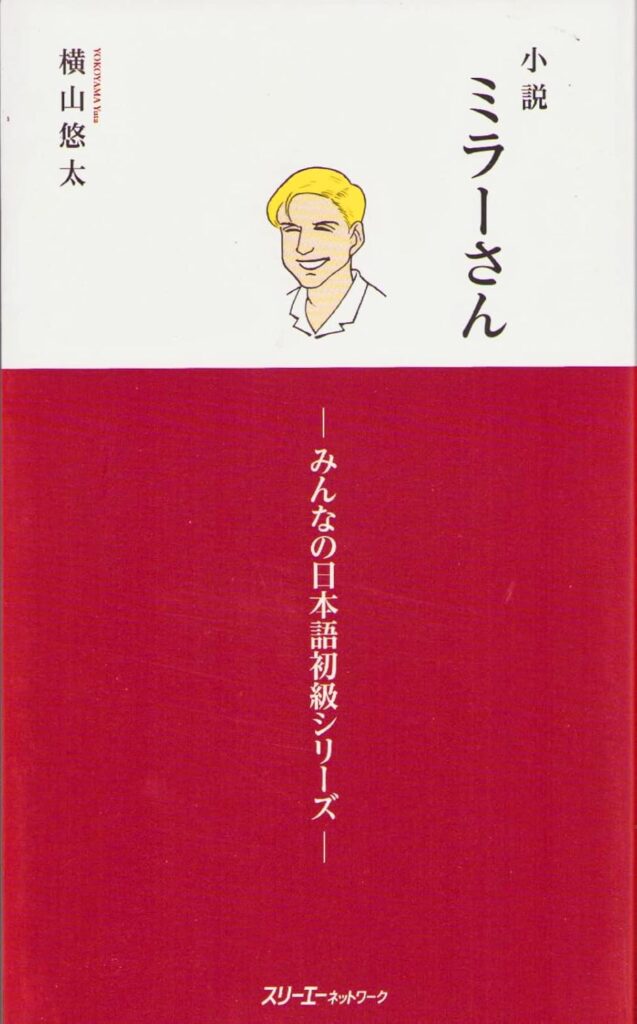
Many students ask me if there are any books they can read when they complete the beginner level.
Some students try to read Japanese books for children because they have more hiragana and furigana, but sometimes the vocabulary and expressions in these books are much too difficult, or their stories are not interesting enough for adult students.
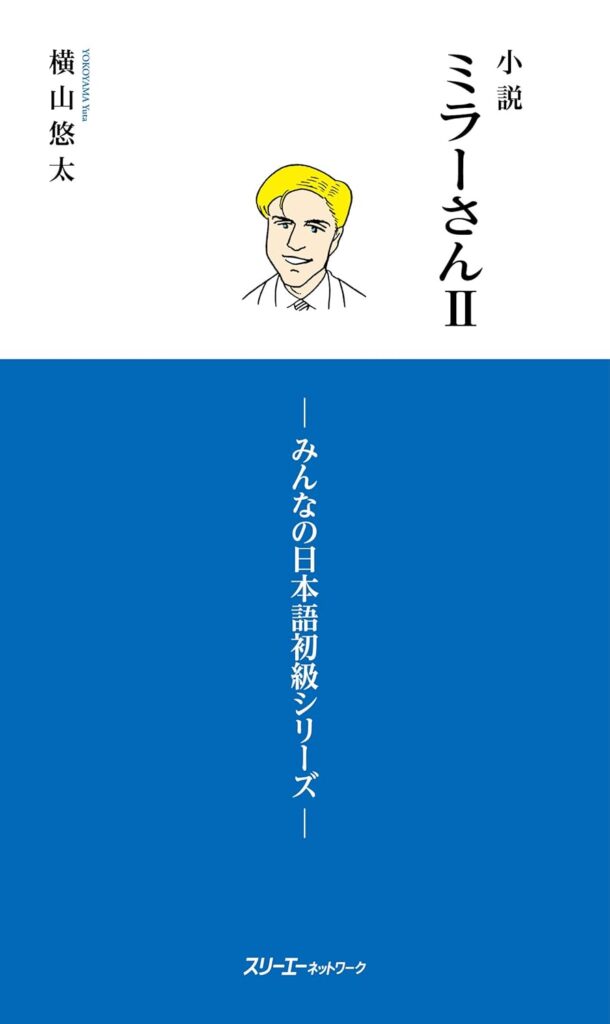
For some students, I use 「小説ミラーさん」for reading practice.
I recommend this novel because it is about Miller’s daily life in Japan, using basic vocabulary and grammar points for those who have finished elementary study. This book is based on the series of「みんなの日本語 Minna no Nihongo」textbooks , but even if you didn’t enjoy using the textbook Minna no Nihongo or have never used it, you can still enjoy this as an easy novel. It includes important beginner grammar points at the JLPT N4 level.
I cannot deny that there are some stereotypical terms related to “being in Japan as a foreigner” in this book, but it is still good for reading practice and creates a certain sense of accomplishment at having read a whole novel in Japanese.